
Fairfield Arrest Records and Charges
Fairfield arrest records can refer to the police or booking record of an arrest: the agency, date, alleged offense, custody event, and related report material when public. Connecticut does not have a Fairfield County sheriff roster, and Fairfield does not run a county jail database. If the person is in state custody, the Connecticut Department of Correction search is the custody channel. If the issue is the police report, Fairfield Police, DESPP, or another arresting agency may hold the record subject to public-record exemptions and erasure rules.
The court charge record is different. Once an arrest or summons moves into court, the prosecutor decides what formal charges proceed. Those court charges after arrest are tracked through Connecticut Superior Court as a pending criminal or motor vehicle case, daily docket, conviction record, or clerk file. The full case outcome belongs on the criminal court records page, while this page focuses on the arrest-to-charge path.
The Fairfield Police Department is the local police source for many town-level police records. The assigned image below comes from the Fairfield Police Department page.
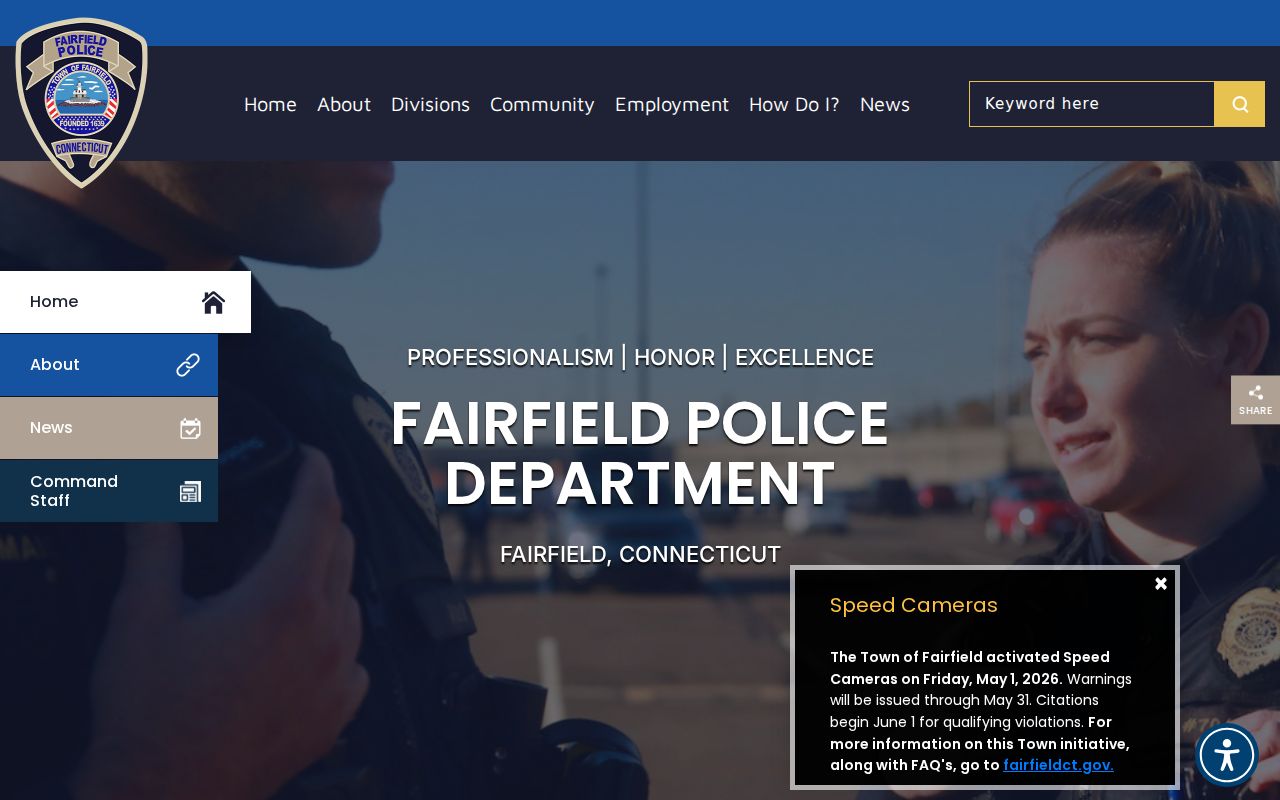
Police records can explain the arrest side, while Superior Court records show the formal charges that proceed in court.
Find Fairfield Arrest Records
Start with the court charge record when the question is what happened after arrest. The Connecticut Judicial Branch criminal and motor vehicle menu has pending case, conviction, daily docket, docket-number, and warrant paths. Pending criminal/motor vehicle search by defendant is useful when the case is active. Conviction search is useful when a final conviction may appear. Daily docket search is useful when a court appearance is near.
- Search the Judicial Branch pending criminal/motor vehicle tool by last name, optional first initial, birth year, court location, and case category.
- Use Bridgeport Geographical Area 2 or Bridgeport Judicial District when the Fairfield matter is tied to those court locations.
- Review each charge listed under the case and note charge description, docket number, court, and next event.
- Check conviction search only when the question is a final public conviction, not merely an arrest or pending charge.
- Request police or DESPP records separately when the arrest report itself is needed and public access is allowed.
For custody or booking status, use the DOC path rather than expecting a county jail roster. For a broad court-record route, use the main court records page.
Charges After Arrest
A charging document is the formal paper or court filing that states the charge. Connecticut sources in this project emphasize the prosecutor and court process rather than a county district attorney model. Fairfield criminal prosecutions route through State's Attorney offices under the Division of Criminal Justice. The court clerk maintains the case record after filing.
| Complaint | Information | Indictment | |
|---|---|---|---|
| Filed By | Police or prosecutor depending on process. | Prosecutor. | Grand jury or formal charging authority where applicable. |
| Common Use | Initial or lower-level criminal allegations. | Many prosecuted charges after review. | More formal serious-charge path where used. |
| Record Role | Starts or supports the court charge record. | States the formal charge the prosecution pursues. | Creates a formal charge record for a serious case. |
| Fairfield Check | Verify the public charge record through the Bridgeport court location and clerk file. | ||
The exact label on a Connecticut case may differ by charge type and court process. The key point for Fairfield arrest records is that arrest data and formal court charges are not the same record.
Fairfield Charge Status
Charges can change after the first court appearance. A count may stay pending, be amended, be reduced, be added, be dismissed, be nolled, or end in conviction. Each charge should be read separately. One arrest can produce several court charges, and each charge can have a different outcome.
| Status | What It Means |
|---|---|
| Pending | The charge remains open and has not reached final disposition. |
| Amended / Reduced | The charge was changed, narrowed, or replaced as the case moved through court. |
| Dismissed | The court ended the charge without a conviction. |
| Nolle | The prosecutor decided not to continue the charge, subject to Connecticut erasure timing rules. |
| Convicted | The charge ended in a guilty plea, finding, or verdict and may show in conviction lookup within display limits. |
| Erased | The record is generally not disclosed after qualifying outcomes under Connecticut erasure law. |
Charges vs Convictions
A Fairfield arrest record or pending charge is not proof of guilt. A charge is an accusation that has entered the court process. A conviction is the outcome after a guilty plea, finding, or verdict. This distinction is central because Connecticut public conviction search has display limits and excludes certain categories, while pending case search can show unresolved charges.
| Charge | Conviction | |
|---|---|---|
| Stage | Filed after arrest, summons, or prosecutor review. | Entered after plea, finding, or verdict. |
| Meaning | An allegation still subject to court process. | A resolved guilty outcome for a charge. |
| Can Change | Yes, charges may be amended, dropped, dismissed, or nolled. | Yes, later appeal, correction, pardon, or erasure may affect access. |
| Lookup Path | Pending case search, daily docket, or clerk file. | Conviction search and clerk disposition record. |
Sealed and Erased Charges
Connecticut erasure law is a major limit on public arrest and charge records. Under Conn. Gen. Stat. section 54-142a, qualifying dismissed, not guilty, nolled, pardoned, and certain conviction records are erased and generally not disclosed. Juvenile cases and Youthful Offender records are treated separately. Sealed matters, active investigations, victim information, protected addresses, and sensitive family-violence details may also be restricted.
| Sealed | Erased | |
|---|---|---|
| Public View | Hidden from ordinary public access. | Generally treated as not disclosable. |
| Reason | Court order, protected case type, confidentiality rule, or sealed filing. | Statutory erasure after qualifying Connecticut criminal outcomes. |
| Effect on Search | The public may see no detail or only limited docket text. | The case or charge may no longer appear in public criminal lookup. |
Note: A missing search result does not prove no arrest or charge ever existed.
Charge Codes and Severity
Court charges are usually tied to a statute or offense description. The record may show a criminal or motor vehicle category, docket number, court location, charge description, and disposition. A felony, misdemeanor, violation, infraction, motor vehicle charge, or referred license/registration suspension matter can have different access and display rules. One arrest can also create several separate counts.
Fairfield cases should be checked through the court system that holds the file. For many lower-level criminal and motor vehicle matters, that means GA 2 at Bridgeport. For more serious cases, it may mean the Bridgeport/Fairfield Judicial District. A police narrative can be requested only from the agency that holds it, and access may be limited by pending investigation, law-enforcement exemptions, or erasure.
- Arraignment
- The early court appearance where charges, rights, counsel, plea posture, and release may be addressed.
- Bond
- A financial or nonfinancial release condition set in the criminal process.
- Capias
- A custody order used in certain court or enforcement contexts.
- Disposition
- The outcome of a charge, such as conviction, dismissal, nolle, or not guilty.
Statewide Criminal History
DESPP and Connecticut State Police channels may matter when the request concerns law-enforcement records or broader criminal-history information rather than the court case file. Fairfield Police records, DESPP records, and court records can overlap, but they are not held by one office. A police report can be withheld in part when an exemption applies. A court charge can be public while the arrest narrative remains restricted.
Public defender information can also be relevant for someone who has charges after arrest. The assigned image below is from the Public Defender geographical area offices listing.
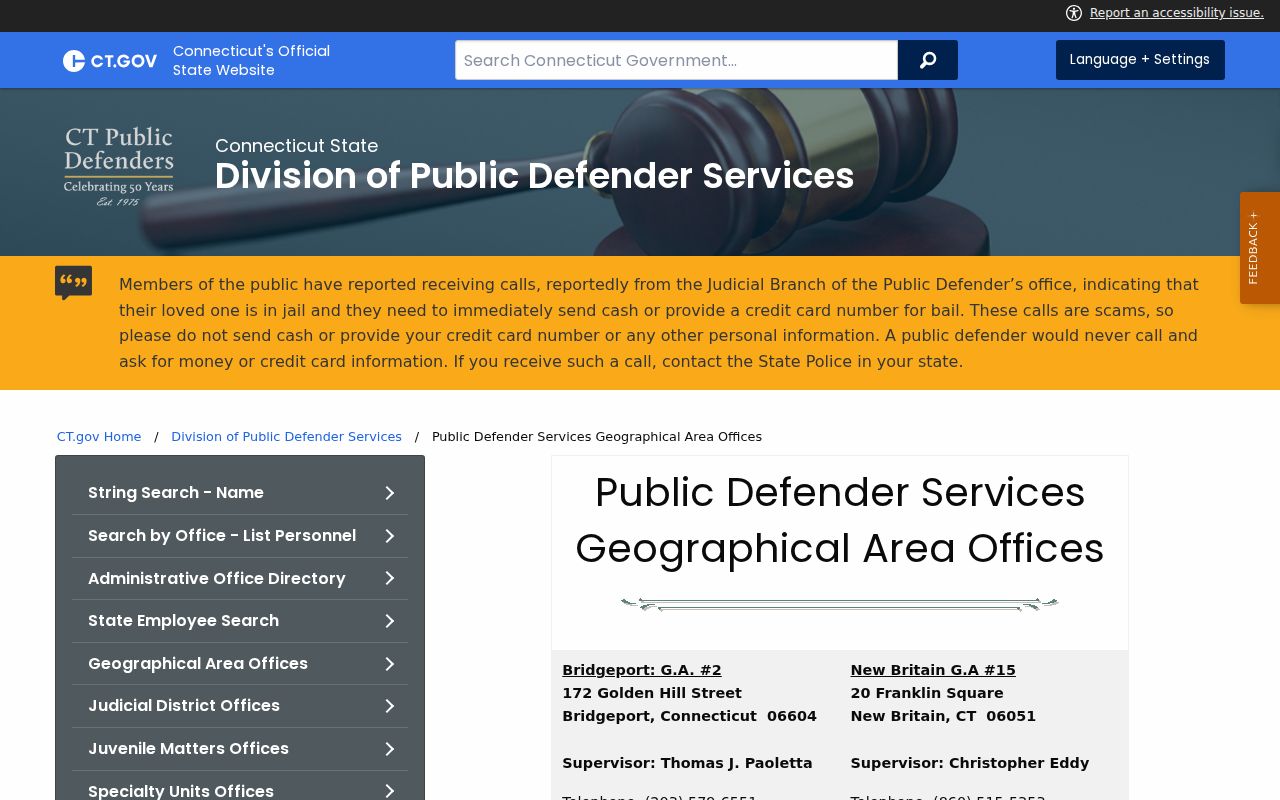
Eligible defendants can use public defender channels to address pending charges, bond, arraignment, and warrant issues, but the clerk remains the court-record source.
Background Check Considerations
Arrest records and court charges are often misunderstood in screening contexts. A pending charge is not a conviction. A dismissed or nolled charge may later be erased. Connecticut conviction display limits can remove information from the public lookup even when older history is being discussed elsewhere. For employment, housing, credit, insurance, licensing, or similar screening, use lawful FCRA-compliant consumer-reporting channels and official correction procedures.
Important: Informational arrest and charge lookup is not a consumer report and should not be used for FCRA-regulated decisions.
Connecticut family and youth-related criminal contexts can have added restrictions. The assigned image below comes from Connecticut family violence and related court statutes.
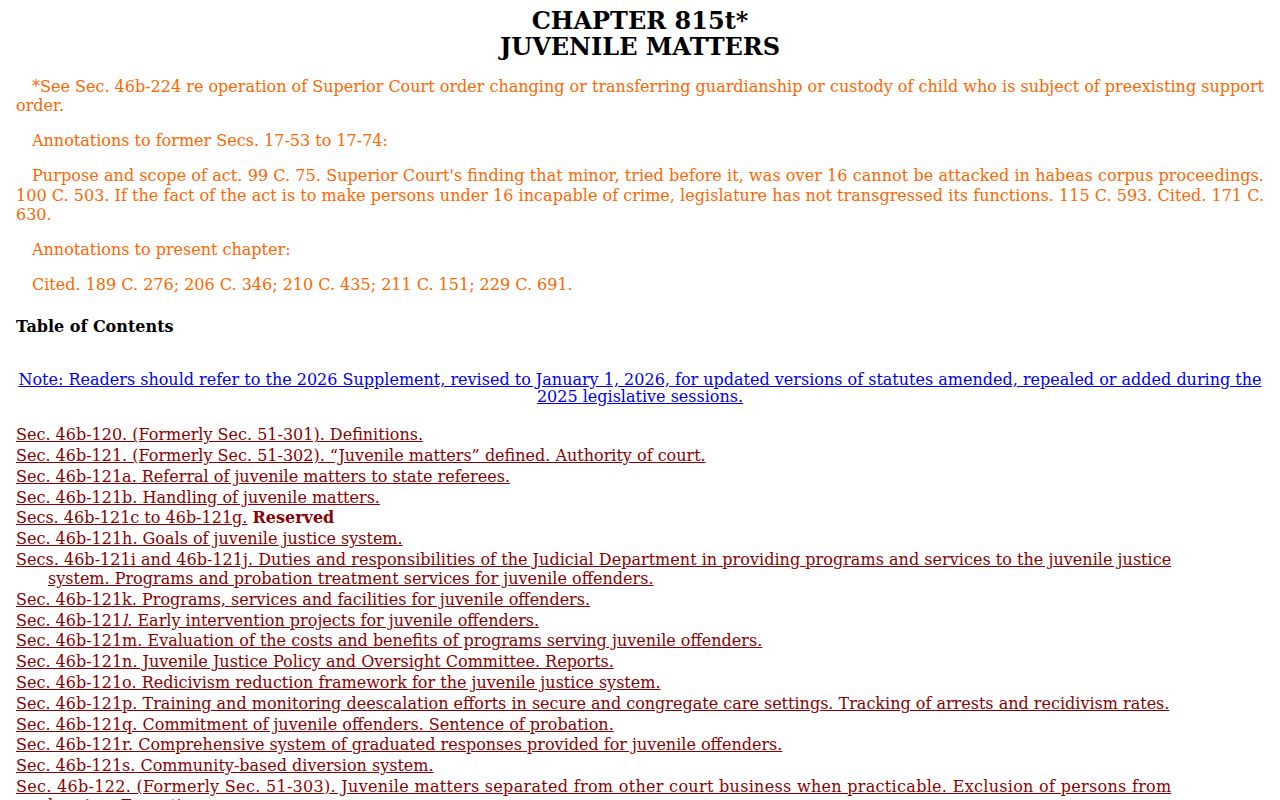
Protective-order, family-violence, juvenile, and sensitive victim information should be checked through official court or agency channels before relying on a public summary.
Restricted Fairfield Charge Records
Restricted charge records include juvenile matters, Youthful Offender cases, sealed filings, erased cases, some family-violence details, victim information, active investigative records, and personal identifiers. The Judicial Branch criminal lookup states that juvenile cases, Youthful Offender cases, and infraction or violation convictions are not shown. It also states that criminal history information may change daily due to erasures, corrections, pardons, and other modifications.
For an active warrant tied to a charge, use the Judicial Branch arrest warrant search and verify through counsel, the court, or law enforcement. For custody after arrest, use Connecticut DOC, not a Fairfield County sheriff. For official copies, use the clerk of the court of record. For police reports, use Fairfield Police, DESPP, or the arresting agency, subject to Connecticut law and agency review.